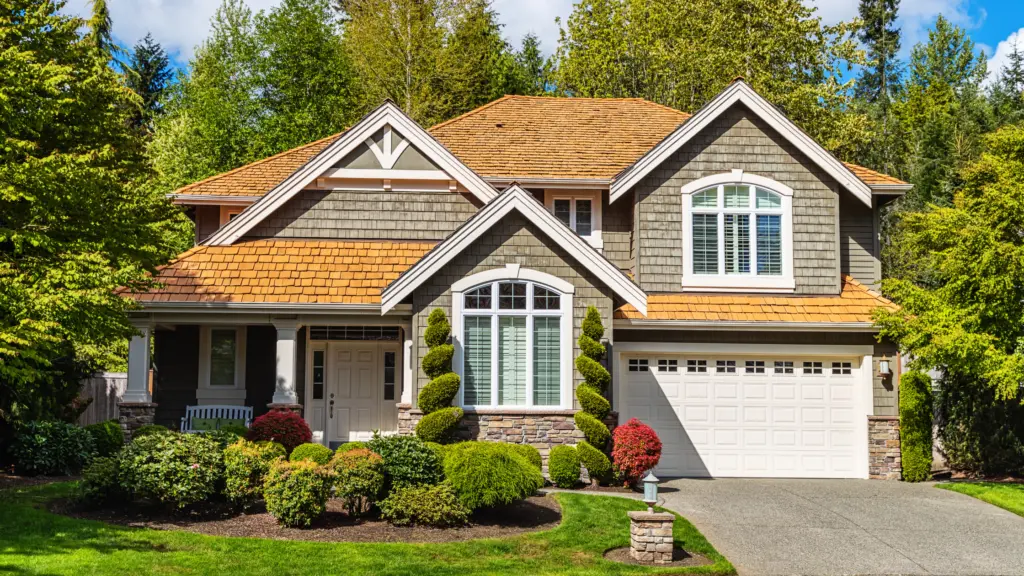
- The ADU rules in Vancouver WA were rewritten by Washington's HB 1337 (2023), which forces cities in urban growth areas to permit ADUs far more freely than before.
- HB 1337 allows up to two ADUs per lot, removes owner-occupancy requirements, restricts parking mandates near transit, and caps ADU impact fees at 50% of a primary home's.
- Build costs run roughly $80,000–$150,000 for a conversion and $150,000–$300,000+ for a detached DADU, plus soft costs.
- A well-located DADU can produce a gross rental yield near 9% on build cost — but Washington's HB 1217 rent cap and financing hurdles need to be modeled in.
Accessory dwelling units have gone from a niche idea to one of the most talked-about moves in Pacific Northwest real estate — and recent changes to Washington law are the reason. If you own a single-family lot in Vancouver, WA, the ADU rules now on the books can turn your backyard or basement into a second stream of rental income, a meaningful bump in property value, and flexible space for family, all without buying another property. This guide breaks down what an ADU actually is, what the current ADU rules in Vancouver WA require after HB 1337, what a unit costs to build, how Washington's rent-cap law affects the rent you can charge, and whether the rental ROI justifies the investment.
The rules here are genuinely investor-friendly compared to most of the country, which is exactly why ADUs keep coming up in conversations about investing in Vancouver WA real estate. But "allowed" and "profitable" are two different questions, and the gap between them is where most owners get tripped up. We'll cover both.
ADU vs. DADU: What's the Difference?
An ADU (accessory dwelling unit) is a self-contained second home on the same lot as a primary residence — its own kitchen, bathroom, and sleeping area. The term covers attached units (an addition or a converted portion of the house) and interior conversions (a basement or attic apartment).
A DADU (detached accessory dwelling unit) — the core of any search for "dadu vancouver wa" — is the freestanding version: a separate small structure in the backyard, sometimes called a backyard cottage, granny flat, or in-law suite. DADUs cost more to build because they need their own foundation and utility connections, but they typically command the highest rent and add the most resale value because they live and feel like a standalone home.
For a Vancouver landlord, the practical distinction is rentability. A converted basement with a shared entrance rents like a roommate situation; a detached DADU with its own door, address, and yard rents like a real house and attracts longer, more stable tenancies. That difference in tenant quality and turnover is one reason DADUs tend to be the better long-term play for investors, even though they cost more up front.
What Washington's HB 1337 Changed
In 2023, Washington passed House Bill 1337 — the "hb 1337 washington adu" law that anchors today's ADU rules — one of the most significant pro-ADU statutes in the country. It requires cities and counties within urban growth areas, which include Vancouver and much of urban Clark County, to permit ADUs much more freely than before. The headline provisions:
- Two ADUs per lot are allowed on most residential lots (for example, one attached and one detached, in various combinations).
- Owner-occupancy requirements are eliminated — you no longer have to live on-site to rent out an ADU, which is the change that matters most for investors.
- Off-street parking mandates are restricted, and cannot be required for ADUs within a half-mile of major transit.
- Impact fees are capped at no more than 50% of what's charged for a primary single-family home.
- ADUs cannot be banned outright or buried under rules that make them infeasible.
Cities have been updating their codes to comply, so the exact local standards in Vancouver continue to evolve. Always confirm current requirements with the City of Vancouver's Community Development department (or Clark County for unincorporated parcels) before you design or budget. Because the statute sets a floor rather than a ceiling, some local provisions may end up more generous than the state minimums — and a few will be challenged or refined over time — so treat the bullets above as the baseline, not the final word.
For investors, the single most important line in HB 1337 is the elimination of owner-occupancy. Before 2023, many Washington jurisdictions required the owner to live in either the main house or the ADU, which effectively barred a pure rental play. Removing that rule is what turns an ADU from a family-flexibility feature into a legitimate income property you can fold into the rest of your portfolio.
Local Rules and Size Limits to Expect
While specifics vary by zone, Vancouver-area ADU regulations typically address:
- Maximum size — DADUs are commonly capped around 800–1,000 square feet, though HB 1337 pushed minimum allowances upward.
- Height and setbacks — limits on how tall and how close to property lines a detached unit can sit.
- Utility connections — whether the ADU taps the main home's water/sewer or needs separate meters.
- Design standards — entrances, and sometimes a requirement that the unit visually match the primary home.
- Short-term rental rules — some jurisdictions treat ADUs rented nightly differently than long-term rentals.
One more permitting reality worth budgeting for: timeline. Between design, civil and structural drawings, plan review, and the build itself, a detached DADU commonly takes the better part of a year from first sketch to a rentable certificate of occupancy. Utility connections — especially if the city requires a separate sewer or water tap — are frequently the slowest and most expensive surprise, so price those before you fall in love with a floor plan.
What Does an ADU Cost to Build in Vancouver WA?
Cost is the single biggest variable, and it swings widely with type and finish level. As general planning ranges for the Vancouver/Clark County market:
- Garage or basement conversion: roughly $80,000–$150,000, since the shell already exists.
- Detached new-build DADU: roughly $150,000–$300,000+, depending on size, site work, and finishes.
- Soft costs: design, permits, impact fees, and utility hookups can add tens of thousands on top of construction.
Prefab and modular DADUs can trim both cost and timeline, but site prep, foundation, and utility connections still apply. Treat any quote as a starting point until you have a site-specific bid.
How you pay for the build shapes the whole investment. Most owners fund an ADU with cash, a HELOC or cash-out refinance against the primary home's equity, or a renovation/construction loan — backyard builds rarely qualify for a standard purchase mortgage, so financing is one of the friction points to solve early. The interest you pay (and the rent the unit eventually earns) also flow into your tax picture, which is part of why an ADU's true return depends as much on the financing structure as on the construction bid.
Don't Forget the Hidden Costs
The construction bid is only part of the all-in number. Property taxes rise once the assessor recognizes a second legal unit, insurance premiums increase, and a rented ADU adds maintenance, turnover, and vacancy that a vacant backyard never had. These are the same line items that catch new landlords off guard everywhere — we cover them in depth in our guide to the hidden costs of owning a rental property. Model them in before you decide an ADU "pays for itself."
The math that makes an ADU work isn't just the rent check — it's adding a fully income-producing unit to land you already own, at a fraction of the cost of buying a second property.
The Rental ROI of an ADU in Vancouver WA
Here's why investors are paying attention to ADU rental ROI in Vancouver. Suppose you build a detached DADU for $220,000 and rent it for $1,600 a month — $19,200 a year in gross rent. Before financing and expenses, that's a gross yield approaching 9% on the build cost, on land you already own. Layer in the other returns:
- Appreciation: a legal, rentable second unit typically raises the property's market value, often by more than the build cost in supply-constrained markets.
- House hacking: owners who live on-site can have the ADU rent cover a large share of their mortgage.
- Flexibility: the same structure can house aging parents, an adult child, or a home office, then convert back to a rental later.
- Tax treatment: as a rental, the unit opens up depreciation and expense deductions — review the specifics with a CPA alongside our guide to rental property tax deductions.
Of course, gross yield isn't net return. Once you subtract management, maintenance, vacancy, taxes, and insurance, the cash-on-cash figure is more modest — which is exactly the analysis you should run before committing. Stress-test the numbers with the same discipline we bring to any rental property investment, using a conservative rent and a realistic vacancy assumption rather than a best case.
How Washington's Rent Cap Affects Your ADU Rent
One legal change that directly shapes ADU returns is HB 1217, Washington's 2025 rent-stabilization law. For most existing tenancies, it limits how much you can raise the rent each year — meaning the rent you set on day one matters more than ever, because future increases are constrained. New construction is generally exempt for its first several years, which can include a freshly built DADU, but the details continue to evolve. Before you price your unit, read our full breakdown of Washington's HB 1217 rent cap so your ROI model uses a realistic long-run rent trajectory rather than open-ended increases.
The honest counterweight to all of this: ADUs are illiquid and capital-intensive up front, financing a backyard build is harder than a standard mortgage, and a poorly managed second unit erases the upside fast. Pressure-test any projection against current market rent — our look at rent prices in Vancouver WA is a useful sanity check on what a small unit actually commands here.
Should You Build an ADU in Vancouver WA?
An ADU makes the most sense if you have a suitable Vancouver-area lot, can fund the build (cash, HELOC, or a renovation/construction loan), and intend to hold the property for the long term. With HB 1337 stripping away owner-occupancy and parking barriers, the regulatory door is more open than it has ever been — and demand for smaller, well-located rentals in Clark County remains strong, one of several reasons investors keep choosing Vancouver WA. The owners who win with ADUs are the ones who treat the unit as a real rental business: permitted correctly, built to last, and managed professionally from day one. If a second unit feels like more than you want to take on solo, weigh it the way you would any decision to buy a rental property — against the time, capital, and management bandwidth it actually requires.
This article is general information, not legal, tax, or construction advice. Confirm current ADU rules with the City of Vancouver or Clark County, and consult licensed professionals before building.
Frequently Asked Questions
What are the ADU rules in Vancouver WA after HB 1337?
Washington's HB 1337 (2023) requires cities and counties in urban growth areas — including Vancouver and much of urban Clark County — to permit up to two ADUs on most residential lots, remove owner-occupancy requirements, limit off-street parking mandates near transit, and cap ADU impact fees at no more than 50% of those for a primary home. The City of Vancouver and Clark County have updated their codes to comply, so confirm current local standards before you design or budget.
Can I rent out an ADU in Vancouver WA without living on the property?
Yes. Washington's HB 1337 (2023) eliminated owner-occupancy requirements for ADUs in urban growth areas, which include Vancouver and much of urban Clark County. You can rent out an ADU as an investor without living on-site.
How many ADUs can I build on one lot in Washington?
Under HB 1337, most residential lots in urban growth areas may have up to two ADUs — for example, one attached and one detached unit, in various combinations. Always confirm current standards with the City of Vancouver or Clark County before designing.
How much does it cost to build a DADU in Vancouver WA?
A detached new-build DADU typically runs about $150,000 to $300,000 or more, while a garage or basement conversion runs roughly $80,000 to $150,000. Soft costs — design, permits, impact fees, and utility connections — add on top of construction.
Does Washington's rent cap apply to a Vancouver WA ADU rental?
If you rent your ADU as a long-term unit, Washington's HB 1217 (2025) rent-stabilization law generally applies, limiting annual rent increases for most existing tenants. Brand-new construction is exempt for its first several years, and the exact rules continue to evolve, so verify the current cap before setting your rent.
Do ADUs increase property value?
Generally yes. A legal, rentable second unit typically raises a property's market value — often by more than the build cost in supply-constrained markets — on top of the ongoing rental income it produces.
Thinking About Adding an ADU to Your Vancouver Rental?
VPMG Property Management helps owners market, lease, and manage ADUs and second units across Vancouver, WA. Get a free rent estimate for your unit at (360) 803-2002.

Written by Avenir Gedarevich, Washington State Designated Broker (WA Managing Broker License #24033559) at VPMG Property Management in Vancouver, WA.