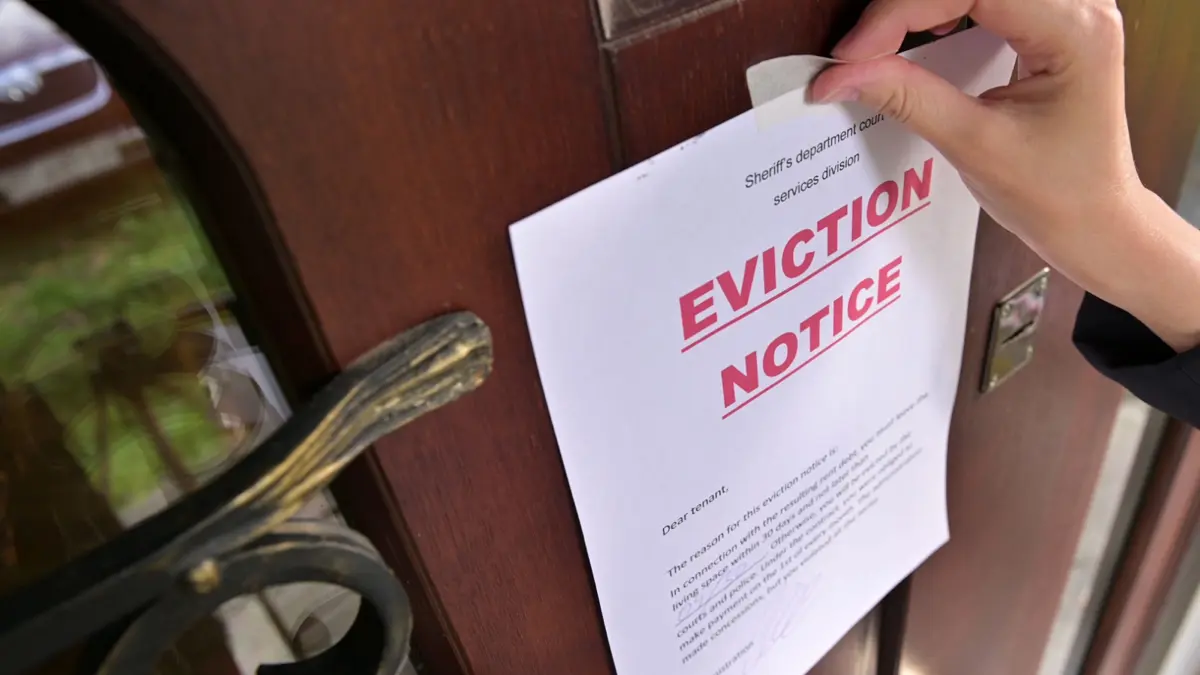
- The court filing fee is the cheapest part. The statutory unlawful detainer filing fee is $45 under RCW 36.18.020; attorney fees, sheriff costs, and lost rent are where the money actually goes.
- Lost rent is usually the largest line item. Contested Washington evictions routinely run months, and the tenant is typically not paying during any of it.
- RCW 59.18.290 lets the prevailing landlord recover fees and costs on paper, but collecting from a tenant who could not pay rent is often impractical.
- Prevention is the real answer: rigorous tenant screening, early intervention on late rent, and sometimes cash for keys all cost less than a courtroom.
Owners usually ask us about eviction costs after the first missed month of rent, when the meter is already running. The honest answer is that the courtroom part, the filing fees and forms, is the cheap part. The expensive part is everything around it: the attorney, the sheriff, the belongings you may have to store, and above all the rent that never arrives while the case works through the system.
This guide walks through every line item a Washington landlord should budget for in 2026, with the figures that can be verified pinned to their sources and the rest expressed as honest ranges. Then it covers the part that matters more: why the cheapest eviction is the one you never file.
The Short Answer
For a straightforward, uncontested nonpayment case in Clark County, direct out-of-pocket costs, meaning filing, service, an attorney handling a routine case, and sheriff enforcement, typically land in the four figures once legal help is involved. Add the lost rent, and the total climbs fast: a Vancouver rental at $2,000 per month that sits unpaid for three months of notices, hearings, and turnover has already cost you $6,000 in rent alone, before a single legal invoice. That is simple arithmetic, not a scare statistic, and it is why the lost-rent section below deserves more attention than the fee schedule.
The Hard Costs, Line by Line
1. The Court Filing Fee
Washington sets a reduced case-initiating filing fee for residential unlawful detainer actions: $45 under RCW 36.18.020, well below the standard civil filing fee. County clerk surcharges and fees for additional orders can add to that base figure, so confirm the current total on the Clark County Clerk's posted fee schedule before filing. Either way, this is the smallest check you will write in the whole process.
2. Service of Process
The summons and complaint must be properly served, and serving them yourself is not an option. Legal-cost surveys such as LegalMatch put typical private process server fees at roughly $50 to $100 or more per service. Locally, the Clark County Sheriff's Office Civil Unit publishes a civil process deposit schedule that runs from about $55 to $140 depending on the zip code and whether one or two people are being served. If service fails on the first attempt, you pay again, which is one more reason precision matters.
3. Attorney Fees
Most Washington landlords hire counsel for unlawful detainer cases, and after 2021 you should assume the tenant will have a lawyer too. Published fee surveys, again including LegalMatch, describe typical Washington eviction attorneys billing around $250 per hour, often against a retainer in the neighborhood of $2,000, with flat fees commonly quoted at $500 to $1,000 per required step of the process. A clean default case sits at the bottom of that range. A contested case with hearings, continuances, and negotiation can run several thousand dollars.
Yes, RCW 59.18.290 allows the prevailing party to recover costs and reasonable attorney fees, subject to the statute's limits. Treat that as a nice surprise, not a budget line. A fee judgment against someone who could not pay rent is frequently uncollectible, so plan as if every legal dollar is spent for good.
4. The Writ of Restitution and Sheriff Fees
If you win, the court issues a writ of restitution and only the sheriff can enforce it. The Clark County Sheriff's Office Civil Unit quotes writ of restitution deposits case by case rather than publishing a flat price, so call the Civil Unit for a quote when you reach this stage. Budget for the deposit plus scheduling reality: the Civil Unit's own guidance warns that writs need substantial additional processing time, which means more days of an occupied, non-paying unit even after judgment.
5. Locksmith, Movers, and Storing the Tenant's Belongings
Eviction day is not free either. You will rekey the locks, and under RCW 59.18.312, if the tenant serves a written storage request within three days after the writ is served, you must store their property in a reasonably secure place. You can charge the tenant your actual moving and storage costs, but you front that money, and recovering it has the same collection problem as everything else. We cover this stage in detail in our guide to Washington eviction notices and timelines.
6. Lost Rent: The Line Item That Eats the Rest
Now the big one. Even a smooth, uncontested nonpayment eviction commonly takes several weeks from the 14-day notice to the sheriff at the door. Contested cases take far longer. Washington's right-to-counsel program under RCW 59.18.640 guarantees qualifying low-income tenants a free attorney, and courts continue hearings until counsel is appointed, so contested cases routinely stretch into months; landlord groups such as the Rental Housing Association of Washington have documented complex King County cases running far longer than that. Every one of those weeks is a week of housing someone who is not paying, and our walkthrough of the Clark County eviction process shows where each of them goes.
7. Turnover and Repairs
Evicted units rarely come back rent-ready. Expect cleaning, paint, and repairs beyond a normal turnover, plus marketing days before the next tenant moves in. The deposit offsets some of it; it rarely covers a hard exit.
8. The Cost of Mistakes
The most expensive line item is the one you cause. Washington's 14-day pay-or-vacate notice must follow the statutory form, and HB 1003, effective July 27, 2025, added an exact-date requirement to termination notices, and HB 2664, effective June 11, 2026, restored first-class mail for the mailed copy. A defective notice does not get fixed mid-case: the court dismisses, and you start the notice period, the filing fee, and the lost-rent clock over from zero. Our 2026 notice requirements guide covers the current rules in full.
The filing fee is $45. The mistake that makes you re-file, after two more months of unpaid rent, costs a hundred times that.
The Soft Costs Nobody Invoices
None of the numbers above capture what an eviction takes out of the owner. There are court dates on workdays, mail runs, calls to attorneys and the Civil Unit, and the low-grade stress of a hostile relationship with someone living in your asset. For out-of-area owners it is worse: coordinating service, hearings, and a sheriff appointment from another state consumes weeks of attention. And when it ends, you still have a vacant unit to turn, market, and fill. Vacancy after an eviction is the same vacancy cost as any turnover, just stacked on top of months that already produced nothing.
How to Avoid Paying Any of This
Almost every eviction we see was preventable at one of three earlier gates.
- Screening. The single highest-return hour in landlording is the one spent verifying income, credit, background, and prior landlord references before handing over keys. Our guide to screening tenants legally in Washington covers how to do it thoroughly and stay inside the state's screening rules.
- Early intervention. Rent problems are cheapest on day two, not day forty. A same-week call, a documented payment plan, and a properly served notice keep options open. Our playbook for when a tenant doesn't pay rent lays out the sequence.
- Cash for keys. It feels wrong to pay someone who owes you money to leave. Run the math anyway. A negotiated move-out payment, exchanged for a signed agreement, returned keys, and a broom-clean unit, is routinely cheaper than months of attorney fees and unpaid rent, and it ends in days instead of months.
How VPMG Keeps Owners Out of Eviction Court
Across our Vancouver and Clark County portfolio, evictions are rare, and that is by design rather than luck. Every applicant passes the same four-part screen: income verification, full credit review, nationwide background check, and direct rental-history calls. Rent collection is firm and consistent, with online payments, immediate follow-up on late rent, and statutorily compliant notices served on time, every time, so small problems never get the runway to become court cases. When a tenancy does fail, we manage the legal process, coordinate counsel, and run the turnover, so the owner's involvement is a phone update rather than a second job. All of it is covered by our flat 8% management fee.
Want Eviction Prevention Built Into Your Rental?
VPMG Property Management screens hard, collects firmly, and handles Washington's notice requirements so Vancouver owners almost never see the inside of an eviction courtroom. Call (360) 803-2002, email info@vancouverpmg.com, or get in touch here.
Frequently Asked Questions
How much does it cost to file an eviction in Washington?
The statutory case-initiating filing fee for a residential unlawful detainer action is $45 under RCW 36.18.020. County clerk surcharges and fees for additional orders can add to that, so confirm the current total on the Clark County Clerk's posted fee schedule before you file. The filing fee is the smallest line item in an eviction: service of process, attorney fees, sheriff costs, and lost rent during the case make up almost all of the real cost.
How long does an eviction take in Washington in 2026?
A clean, uncontested nonpayment case commonly takes several weeks from the first notice to the sheriff enforcing the writ of restitution. Contested cases take much longer. Washington's right-to-counsel program under RCW 59.18.640 guarantees qualifying low-income tenants a free attorney, and courts continue hearings until counsel is appointed, so contested evictions routinely stretch into months. The landlord usually collects no rent during that entire period.
Can a landlord recover attorney fees from the tenant after an eviction?
Often yes on paper, rarely in practice. RCW 59.18.290 lets the prevailing party recover costs and reasonable attorney fees in an unlawful detainer action, subject to limits in the statute. The practical problem is collection: a judgment against a tenant who could not pay rent is frequently uncollectible, so most landlords should treat attorney fees and court costs as money spent, not money loaned.
Is cash for keys legal in Washington, and is it cheaper than evicting?
Yes, cash for keys is legal in Washington. It is a voluntary agreement where the landlord pays the tenant to move out by an agreed date, usually in exchange for a signed move-out agreement and the unit left in reasonable condition. Compared against attorney fees, court costs, sheriff fees, and months of unpaid rent during a contested case, a cash-for-keys payment is often the cheaper and faster outcome. Put the agreement in writing and pay only after the keys are returned and the unit is vacant.
What happens to the tenant's belongings after a sheriff eviction in Washington?
Under RCW 59.18.312, if the tenant serves a written storage request within three days after the writ of restitution is served, the landlord must store the tenant's property in a reasonably secure place, which can include the unit itself. The landlord may charge actual moving and storage costs, but fronts those costs first. Movers, storage, and a locksmith are real line items at the end of an eviction that many first-time landlords never budget for.

Written by Avenir Gedarevich, Washington State Designated Broker (WA Managing Broker License #24033559) at VPMG Property Management in Vancouver, WA.