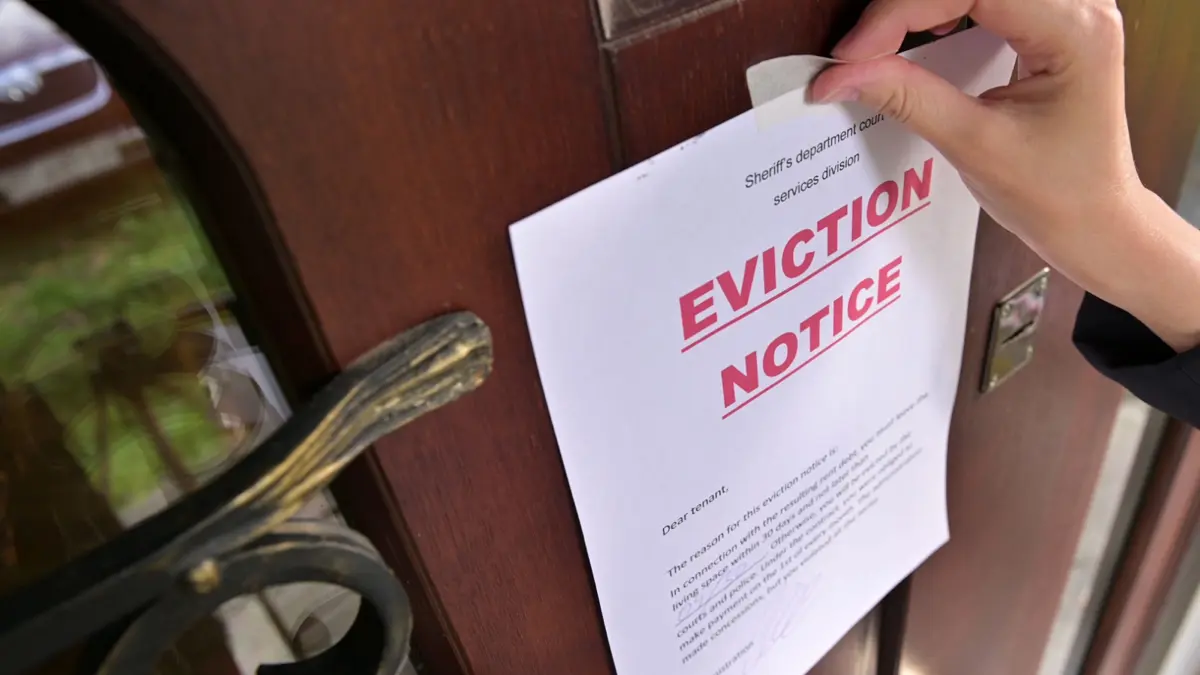
- Washington has no statute literally named "squatters rights." What people mean is adverse possession under RCW 7.28 — and it almost never applies to an actively managed rental.
- Adverse possession in Washington requires 10 years of open, exclusive, hostile, continuous possession — or 7 years with color of title plus payment of property taxes.
- You may never change the locks, cut utilities, or remove belongings yourself. RCW 59.18.290 bans self-help eviction in Washington.
- To remove a squatter in Washington you classify the occupant, call law enforcement, serve proper notice, and let a court and the county sheriff do the removal.
- The real risk for Vancouver, WA owners is a long vacancy — keep the property occupied, inspected, and monitored to prevent squatters entirely.
Few words make a Washington property owner's stomach drop faster than "squatter." The fear is real: someone moves into your vacant rental without permission, refuses to leave, and you've heard they somehow have "rights." The good news is that the headlines oversell the danger. Squatters rights in Washington are far narrower than the fear surrounding them — the state does not hand your property to a stranger because they slept there for a few weeks. But the law also forbids you from simply changing the locks or throwing their belongings on the curb, and getting the removal process wrong can cost you far more than the squatter ever will.
This guide explains what squatters rights in Washington actually mean, how the underlying doctrine of adverse possession works under RCW 7.28, how squatters differ from trespassers and holdover tenants, the lawful way to remove an unauthorized occupant, and — most importantly — how to keep one out of your Vancouver, WA property in the first place. For the broader legal backdrop every owner should know, start with our overview of landlord rights in Washington State.
Do Squatters Really Have Rights in Washington?
There is no Washington statute that grants "squatter's rights" by name. What people are usually referring to is adverse possession — a centuries-old legal doctrine that, under very narrow conditions, can transfer ownership of land to someone who has occupied it long enough. It exists to resolve old boundary disputes and abandoned land, not to reward break-ins. In practice, the bar is extraordinarily high, and a squatter in a property you actively own, insure, and pay taxes on will almost never meet it.
It helps to separate two very different questions that the phrase "squatters rights" blurs together. The first is whether an unauthorized occupant can ever own your property — that is the adverse possession question, and the honest answer for a normal Clark County rental is "effectively no." The second is whether you can remove that occupant on your own timeline and by your own hand — and there the answer is also "no," because Washington gives any established occupant the protection of a court process before they can be put out. Most of the real-world pain owners feel comes from that second rule, not the first. Understanding the difference is what keeps a frustrating situation from turning into an expensive one.
How Adverse Possession in Washington Works (RCW 7.28)
Adverse possession in Washington is governed by RCW 7.28. A person claiming title this way must prove their occupation was all of the following, continuously, for a full 10 years:
- Open and notorious — obvious enough that a reasonable owner would notice
- Actual — physically using the property as an owner would
- Exclusive — not shared with the true owner or the public
- Hostile — without the owner's permission
- Continuous and uninterrupted for the entire 10-year period
Every one of those elements must be present for the entire decade. Miss any single one — the owner reasserts control, the occupant shares the space, the use is hidden, or the possession is interrupted — and the clock resets to zero. A shortened period of 7 years can apply only where the occupant holds "color of title" (a flawed but facially valid document suggesting ownership) and has paid the property taxes the entire time (RCW 7.28.070). That combination is exceedingly rare for a squatter who simply walked into a vacant house.
The takeaway for landlords is reassuring: if you are paying your property taxes, carrying landlord insurance, and periodically checking on the home, the adverse-possession clock effectively never starts. Each documented inspection or contact reasserts your ownership and breaks the "exclusive" and "continuous" requirements. Adverse possession in Washington is a real-estate boundary remedy — the classic example is a neighbor's fence that has sat three feet over the line for decades — not a realistic threat to an actively managed Vancouver, WA rental.
Squatter vs. Trespasser vs. Holdover Tenant
The correct removal path depends entirely on how the person got there. Misclassifying the situation is the single most common — and most expensive — mistake owners make.
- Trespasser: Someone with no claim of right who recently entered. If there is no tenancy and no color of legitimacy, this can sometimes be handled as a criminal matter through law enforcement.
- Squatter: Someone occupying the property without permission who has established enough presence (mail, utilities, furnishings, time) that police treat it as a "civil matter" and decline to remove them. These almost always require a court process.
- Holdover tenant: A former tenant who stayed past the end of their lease. This is not a squatter — it is a landlord-tenant dispute governed by the Residential Landlord-Tenant Act and resolved through the formal eviction (unlawful detainer) process. If a tenant simply stops paying, that is also an eviction matter, not a squatter case — see what to do when a tenant doesn't pay rent.
Why does the label matter so much? Because it dictates which door you walk through. Treat a holdover tenant like a criminal trespasser and the police will (correctly) refuse to act, leaving you to restart with a proper notice and an unlawful detainer filing — weeks lost. Treat an established squatter like a trespasser and you risk an illegal lockout. The safest move when you are unsure is to assume the matter is civil and requires a court order, then let an attorney or property manager confirm whether the faster criminal-trespass path is actually available. When in doubt, our guide on how to evict a tenant in Washington walks through the notice-and-filing sequence step by step.
The One Rule You Cannot Break: No Self-Help
Whatever the category, Washington flatly prohibits "self-help" eviction. Under RCW 59.18.290, an owner may not change the locks, shut off utilities, remove doors or windows, seize belongings, or use threats to force an occupant out. Doing so exposes you to statutory damages, the occupant's attorney fees, and even a wrongful-eviction claim — frequently costing more than a lawful removal would have. The lock stays on until a court order says otherwise.
The squatter rarely costs you the property. The reflex to "just handle it yourself" — changing the locks or hauling their things to the curb — is what actually costs you, in statutory damages and attorney fees.
How to Remove a Squatter in Washington (the Legal Way)
Here is the part owners actually search for: how to remove a squatter in Washington without breaking the law or handing the occupant a damages claim. The lawful route depends on the classification above, but it generally follows this sequence:
- Document everything. Photograph the occupied property, gather proof of ownership and tax payments, and note when you discovered the occupant.
- Call law enforcement first. For a clear, recent trespasser with no colorable claim, police may remove them as a criminal trespass under RCW 9A.52. Have your ownership documentation ready.
- Serve the proper written notice. If officers deem it a civil matter, you must serve the appropriate notice to vacate before filing.
- File an unlawful detainer or ejectment action. Unlawful detainer is the fast-track court process for removing occupants; a true ownership-claim squatter may instead require an ejectment action. The court, not you, issues the order.
- Let the sheriff execute the order. Only the county sheriff may physically remove an occupant and restore possession to you.
One detail that trips owners up even after a lawful removal: the occupant's belongings. You cannot dump them on the curb. Washington has specific rules for handling property left behind after a tenancy ends, and the safest practice is to inventory, store, and provide notice rather than discard — the same principles we cover in our guide to handling a tenant's possessions after an eviction. When property is involved, "throw it out" is almost always the wrong instinct.
Because the categories carry different procedures and deadlines, this is a situation where a qualified property manager or a landlord-tenant attorney pays for itself — one misstep restarts the entire process, and in the meantime the occupant stays put rent-free.
How to Keep Squatters Out in the First Place
Prevention is dramatically cheaper than removal. The properties that get occupied are almost always the ones that look — and are — neglected.
- Never let a property sit visibly vacant. Collect mail, maintain the landscaping, and keep the lights on a timer so the home looks lived-in.
- Inspect regularly. Routine drive-bys and interior checks catch an occupant in days, not months — long before any adverse-possession clock could matter.
- Secure every entry point. Solid locks, secured windows, and an alarm or camera deter casual entry. Post "No Trespassing" signage to support a future criminal complaint.
- Screen tenants thoroughly. Many "squatter" cases are really holdover tenants. Strong tenant screening and clear lease end-dates prevent most of them.
- Act immediately. The moment you learn someone is in your property, start the lawful process. Delay is the squatter's only real advantage.
Almost every squatter case begins with the same root cause: an empty home that nobody is watching. The single most effective prevention strategy is simply not leaving a unit vacant and unattended for long — which is exactly why minimizing turnover matters beyond just lost rent. Our guide to reducing vacancy rates covers the marketing and retention tactics that keep a paying tenant in place, and a tenant in place is the best squatter deterrent there is.
Bottom Line for Washington Owners
Squatters' rights in Washington are far weaker than the fear surrounding them. Adverse possession requires a decade of uninterrupted, hostile occupation that an attentive owner makes impossible. The genuine risk isn't losing your property — it's reacting badly: an illegal lockout, a botched notice, or months of inattention that let an occupant dig in. Stay engaged with your property, classify the situation correctly, and follow the court process, and the law is firmly on your side.
This article is general information, not legal advice. Squatter and eviction matters are fact-specific — consult a Washington landlord-tenant attorney before acting.
Frequently Asked Questions
How long does it take to get squatters' rights in Washington?
Washington recognizes adverse possession, not informal "squatters' rights." It requires 10 years of open, notorious, exclusive, hostile, and continuous possession under RCW 7.28 — or 7 years with color of title and payment of property taxes. For a property you actively manage, insure, and pay taxes on, that threshold is effectively never met.
Can I remove a squatter myself in Washington?
No. Washington prohibits self-help eviction under RCW 59.18.290 — you cannot change the locks, shut off utilities, remove doors, or seize belongings. You must involve law enforcement and, where required, obtain a court order so the sheriff can carry out the removal.
Are squatters and trespassers the same thing?
No. A recent trespasser with no claim of right can sometimes be removed by police as a criminal matter under RCW 9A.52. An established squatter — one with mail, utilities, or time on the property — is usually treated as a civil matter and requires a court process.
How do I keep squatters out of a vacant rental?
Keep the property looking occupied, inspect it regularly, secure every entry point, post "No Trespassing" signage, screen tenants thoroughly to avoid holdovers, and act immediately the moment you discover an unauthorized occupant.
What is adverse possession in Washington?
Adverse possession is the legal doctrine behind so-called squatters rights in Washington. Under RCW 7.28, a claimant can acquire title only after 10 years of possession that is open and notorious, actual, exclusive, hostile, and continuous — or 7 years with color of title and payment of property taxes. It was designed to settle old boundary and abandoned-land disputes, not to reward break-ins, and an actively managed rental will almost never qualify.
Keep Your Vancouver WA Rental Occupied and Protected
VPMG Property Management keeps owner properties tenanted, inspected, and monitored — the single best defense against squatters and costly vacancies. Talk to our team at (360) 803-2002.

Written by Avenir Gedarevich, Washington State Designated Broker (WA Managing Broker License #24033559) at VPMG Property Management in Vancouver, WA.